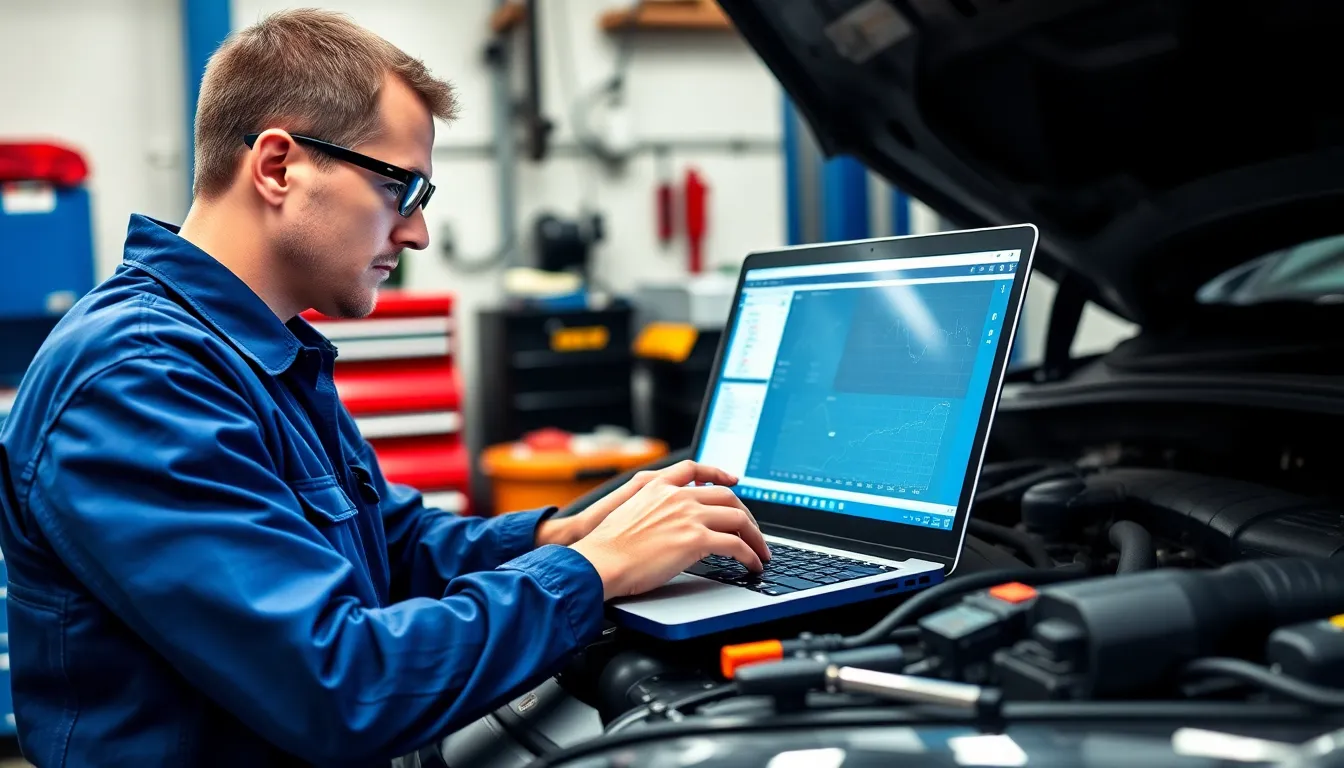
In a world where cars are practically computers on wheels, having the right tools to diagnose issues is crucial. Enter professional automotive diagnostic software for laptops—a mechanic’s secret weapon that turns even the most stubborn vehicles into obedient machines. Forget the days of guessing what’s wrong; this software helps pinpoint problems faster than you can say “check engine light.”
Professional Automotive Diagnostic Software for Laptop
Professional automotive diagnostic software for laptops provides mechanics with advanced tools to assess vehicle performance. Comprehensive features enable users to read and clear trouble codes for various systems, including engine, transmission, and ABS. These applications support multiple vehicle makes and models, enhancing their versatility across different automotive brands.
Intuitive interfaces simplify navigation. Mechanics can promptly access live data streams, offering insights into real-time vehicle conditions. This functionality aids in pinpointing problems swiftly, reducing diagnostic time significantly. Data logging features capture performance metrics over time, allowing for thorough analysis and trend observation.
Customizable options help users tailor the software to specific needs. Mechanics can prioritize functions based on their expertise, improving workflow efficiency. Some software solutions incorporate advanced capabilities such as on-board diagnostics II (OBD-II), providing insights into emissions-related issues.
Regular updates ensure the software remains compatible with new vehicle technologies. This aspect is crucial for mechanics working with the latest automotive advancements. As technology evolves, so do diagnostic needs, placing an emphasis on utilizing the most current software solutions available.
Affordability is another key consideration. Various pricing models exist, ranging from one-time purchases to subscription-based services. Mechanics can find solutions that fit their budget while still offering the necessary functionality. Thus, selecting the right software involves evaluating features against needs and cost.
Overall, automotive diagnostic software for laptops plays a pivotal role in modern automotive repair, empowering mechanics with the tools required to keep vehicles running smoothly.
Key Features to Look For
Key features in professional automotive diagnostic software significantly impact a mechanic’s efficiency and capabilities. Focusing on specific attributes helps streamline repair processes and improves diagnostic accuracy.
User Interface and Usability
A user-friendly interface enhances the overall experience for mechanics. An intuitive design allows quick navigation through various features, minimizing the learning curve. Efficient layout showcases relevant information prominently, ensuring mechanics can access data rapidly. Customizable dashboards enable users to prioritize essential details according to their needs. Accessibility features, such as clear icons and readable fonts, contribute to a smoother workflow.
Compatibility with Vehicle Makes and Models
Compatibility is crucial for automotive diagnostic software as it determines the range of vehicles mechanics can service. Comprehensive support for multiple makes and models expands a mechanic’s ability to address various customer needs. Leading software often includes updates that ensure it adapts to new vehicle technologies and specifications. Verification of compatibility with specific manufacturer systems enhances the diagnostic process and builds trust. Multiple database access allows for broader coverage, covering both domestic and foreign vehicles effectively.
Top Professional Automotive Diagnostic Software Options
Several automotive diagnostic software options stand out for their robust features and user-friendly interfaces, allowing mechanics to enhance their diagnostic capabilities.
Software 1: Features and Benefits
Autel MaxiSYS shines as a professional tool, offering extensive vehicle coverage for over 80 manufacturers. It provides advanced functions like active tests and ECU programming, which help identify and rectify issues efficiently. The intuitive interface simplifies navigation, making it easy to access live data and diagnostic reports. Mechanics appreciate the built-in repair database that offers solutions alongside diagnosed problems, improving troubleshooting timelines. With frequent updates, Autel MaxiSYS remains compatible with the latest vehicle models, ensuring users benefit from continuous enhancements.
Software 2: Features and Benefits
Snap-on MODIS Edge combines diagnostic capabilities with a comprehensive scan tool for versatile use. This software includes access to over 32 million diagnostic codes, enabling mechanics to efficiently pinpoint faults. The display offers a customizable dashboard, allowing users to tailor information to their preferences. Comprehensive repair information and wiring diagrams are integrated, providing invaluable support during repairs. With wireless connectivity, mechanics can seamlessly update their software, ensuring the tool remains up-to-date with new features and vehicle technologies.
Software 3: Features and Benefits
Launch X431 V+ provides a powerful diagnostic platform with multi-vehicle coverage and advanced functionality. This software includes a variety of OBD-II functions, allowing for in-depth analysis of engine and emissions systems. The real-time data graphs facilitate quick assessments, enhancing the troubleshooting process. Users benefit from cloud-based features that allow easy sharing of diagnostic reports and data. Regular updates ensure the software’s adaptability to evolving automotive technologies, making it suitable for contemporary repair shops.
Comparison of Pricing and Performance
Pricing and performance of automotive diagnostic software vary significantly among different options. Many software solutions offer subscription-based models, while others require a one-time purchase, catering to diverse budget needs. For instance, Autel MaxiSYS typically ranges from $1,500 to $3,000, reflecting its extensive features and vehicle coverage. In contrast, Launch X431 V+ represents a more budget-friendly alternative, often priced between $600 and $800.
Performance metrics often correlate with pricing. Higher-priced software usually includes advanced functions like ECU programming and comprehensive repair databases. Consider Snap-on MODIS Edge, which combines diagnostic capability with robust performance but comes at a premium price starting around $3,000. Access to millions of diagnostic codes enhances its value for professional mechanics.
User experiences can differ based on specific needs. Mechanics focused on versatility might opt for software with wider vehicle compatibility, even if it means compromising on advanced features. Software offering frequent updates ensures compatibility with emerging vehicle technologies, proving essential for those working on new models.
Integration capabilities also affect pricing structures. Some solutions provide cloud functionality for easy report sharing at no extra cost, enhancing workflow efficiency. Customization options, such as user-friendly dashboards and intuitive interfaces, play a significant role in user satisfaction.
Evaluating both pricing and performance involves assessing how well software meets individual diagnostic requirements. Weighing the importance of features against budget constraints helps mechanics choose the most suitable tools for their specific operations. Each software option presents unique strengths, allowing professionals to find the right balance that fits their needs.
Conclusion
Professional automotive diagnostic software for laptops is a game changer for modern mechanics. It streamlines the diagnostic process and enhances repair efficiency by providing essential tools for accurate vehicle assessments. With features like live data streaming and customizable dashboards, mechanics can quickly identify issues and tailor their approach to each vehicle.
Investing in the right software not only boosts productivity but also ensures that mechanics stay ahead in a rapidly evolving industry. By evaluating options based on compatibility, features, and pricing, mechanics can find the perfect solution that meets their specific needs. Embracing this technology ultimately leads to improved service quality and customer satisfaction.